Most switch and socket failures do not begin as random accidents. They usually begin with a small weakness in contact force, material quality, internal structure, or installation tolerance, then become visible only after load, temperature, or repeated use exposes the weakness.
This page is a prevention-focused technical guide. It explains which common switch and socket problems buyers should expect, what usually causes them, and how those problems can be reduced before products reach installation. If you need the broader supplier-capability view first, start with our guide to an electrical switch and socket manufacturer in China.
Based on sample review, repeat-order follow-up, failure comparison, and buyer-side troubleshooting across wall switch and socket projects, the most expensive problems are often predictable early. The real challenge is that they are often approved while still looking minor.
Contents
- Why Common Switch and Socket Problems Are Usually Predictable
- Problem 1: Overheating Under Load
- Problem 2: Sudden Loss of Function
- Problem 3: Difficult Installation and Poor Fit
- Problem 4: Early Surface Aging or Structural Instability
- How Buyers Reduce These Problems Before Approval
- How This Page Connects to Materials, Process, and Safety Review
- FAQ
Why Common Switch and Socket Problems Are Usually Predictable
Switches and sockets fail in patterns. Overheating usually traces back to resistance and poor contact behavior. Dead units often come from weak mechanisms, loose internal connections, or damaged terminals. Difficult installation is commonly linked to poor frame rigidity, cramped wiring space, or dimensional inconsistency. Early aging often points back to housing grade, finish quality, or material shortcuts.
| Visible problem | What usually sits behind it | Why buyers should care early |
|---|---|---|
| Overheating or discoloration | High resistance, weak contact force, poor conductor path | Thermal risk usually grows after approval, not before it |
| Switch or socket stops working | Mechanism failure, loose terminals, internal damage | A good sample does not guarantee repeat-order stability |
| Difficult installation | Weak frame, bad tolerances, poor wiring-space layout | Installation problems create labor cost and project friction quickly |
| Surface aging or body deformation | Weak housing grade, poor plastic choice, low heat tolerance | Visual complaints and structural risk often appear later in the market |
The practical value of prevention is simple: it is cheaper to judge the weak point before mass shipment than to explain it after projects are installed.
Problem 1: Overheating Under Load
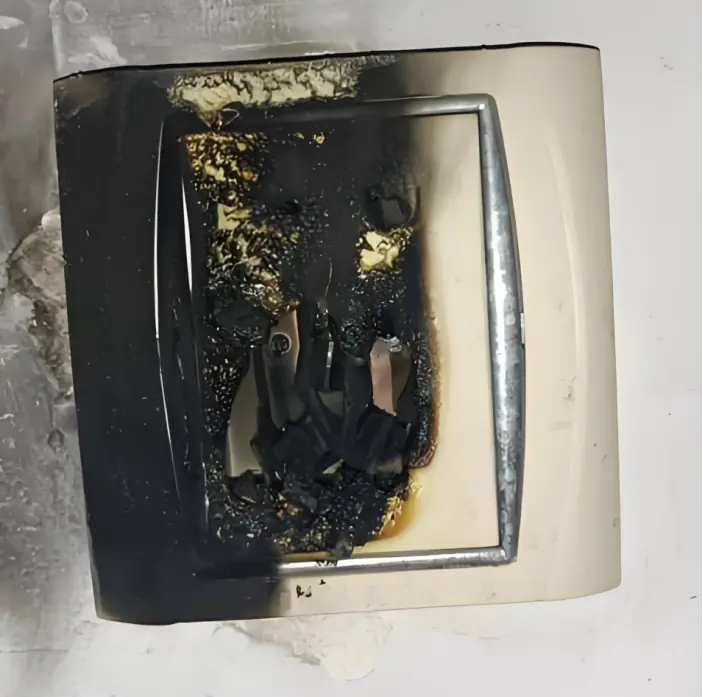
An overheating socket or switch is one of the most serious product failures because the visible damage usually appears after internal resistance has already been building for some time. Heat rise often comes from poor contact force, unstable interfaces, weak conductor design, or material choices that reduce long-term electrical margin.
- contact parts lose elasticity and stop gripping plug pins or switching points firmly
- current-carrying parts use lower-performance materials or unstable plated substitutes
- terminal structure loosens under vibration, repeated load, or thermal cycling
If you need the deeper technical view behind this issue, our guide to why wall switches overheat under load explains how conductor material, contact resistance, and structure affect temperature rise.
From a buyer perspective, overheating prevention is not just about passing a lab test. It is about whether the product can keep low-resistance current paths and stable contact pressure across years of use, not only during initial approval.
Problem 2: Sudden Loss of Function
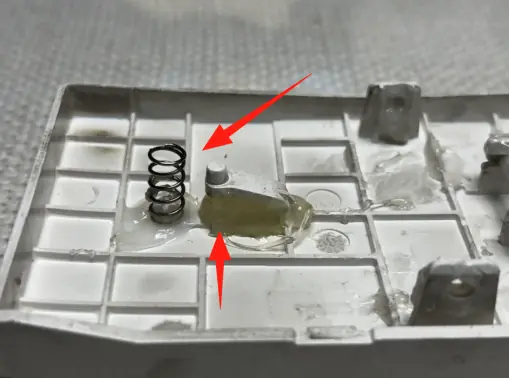
When a switch or socket suddenly stops working while the breaker and external circuit still appear normal, the failure often sits inside the device. Common causes include weak rocker mechanisms, damaged terminal paths, poor internal layout, or connections that were only stable during early use.
This problem is especially common in hotels, offices, and commercial environments where switching frequency and loading cycles are higher. A device that looks acceptable in light household testing may show a much shorter life in higher-usage environments.
- weak mechanical parts may fail after far fewer cycles than expected
- poor terminal design can damage conductors during installation
- unclear internal layout increases the chance of unstable or damaged wiring
Where this issue keeps repeating, buyers should look beyond the failed unit and ask how the product is assembled, checked, and kept stable from sample to bulk. Our wall switch and socket manufacturing process and quality guide explains that control path in more detail.
Problem 3: Difficult Installation and Poor Fit
Installation problems are easy to underestimate because they do not always look like product defects in the factory. On site, however, poor installation behavior quickly becomes a cost problem. Electricians lose time when frames warp, terminals are awkward to access, wiring space is too tight, or decorative parts do not align cleanly after mounting.
These issues often trace back to frame strength, tooling precision, assembly sequence, and structural design rather than one isolated mistake. Buyers working on contractor-driven supply should treat installation behavior as part of product quality, not as a separate issue.
| Installation complaint | Likely design or production cause |
|---|---|
| Not enough room for conductors | Cramped internal layout or weak box-space planning |
| Frame bends or sits unevenly | Weak frame material or poor rigidity |
| Faceplate alignment looks poor | Loose dimensional control or assembly inconsistency |
Products that install cleanly usually come from more disciplined structural design, not from cosmetic polishing alone.
Problem 4: Early Surface Aging or Structural Instability
Some products do not fail electrically first. They fail visually or structurally. Yellowing, poor gloss stability, cracking, weak rigidity, or deformation under heat are often signs that the housing or faceplate grade was not strong enough for the market environment or expected service life.
This issue matters more in hot climates, higher-end interiors, and projects where visible aging quickly becomes a complaint even if the product still functions. If you want the material side of that judgment, our guide to high-grade polycarbonate versus ABS in switch housings explains why housing-grade decisions should not be treated as surface-only differences.
For outlets specifically, buyers should also check the consistency of contact metals, terminal structure, housing grade, and plating logic together. Our materials used in electrical outlets guide breaks that review process down more directly. If the surface complaint is mainly about soft-touch or “baby skin” finishes aging in hotter regions, our soft-touch wall switch guide for high-temperature markets explains why that issue is often climate-driven rather than an immediate electrical fault.
How Buyers Reduce These Problems Before Approval
Prevention starts when buyers stop treating product failure as a post-sale issue only. The cleaner approach is to test likely weak points before approval. That usually means checking not only samples, but also whether the supplier can explain structure, materials, version control, test basis, and repeat-order stability clearly.
- ask what internal material and structure are fixed in the quoted model
- compare sample build, datasheet language, and approval files for consistency
- treat installation behavior and wiring space as quality indicators, not minor details
- review safety and compliance language as scope, not as a shortcut that answers every risk question
If approval language is part of the decision, our electrical outlet safety standards guide is the better next step for checking which safety claims buyers should verify before relying on them.
How This Page Connects to Materials, Process, and Safety Review
This page works best as a problem-prevention support page inside the current technical and buyer-review cluster. It is not trying to replace deeper pages on overheating, materials, manufacturing process, or safety approval. Its role is to show how those topics connect once failures start appearing in the same product line.
| If the next question is... | Go next to... |
|---|---|
| Why does overheating risk grow under load? | overheating and conductor guide |
| How do materials and plating affect repeat-order risk? | electrical outlet materials guide |
| How is stable quality actually controlled in production? | manufacturing process and quality guide |
| How should buyers judge housing-grade differences? | switch housing materials guide |
Review basis used in this page: sample comparison, field-failure review, repeat-order follow-up, buyer-side troubleshooting, and technical review of contact systems, housing materials, installation behavior, and approval logic in wall switch and socket projects. This page supports buyer evaluation and problem prevention. It does not replace market-specific legal, certification, or installation advice.
FAQ
What is the most dangerous common socket problem?
Overheating is usually the most serious because it can indicate unstable resistance, poor contact pressure, and rising thermal risk inside the product before the failure becomes fully visible.
Why do some switches or sockets fail after working normally at first?
Because many weak points appear only after repeated use, heat cycling, or later batches. Early samples and first orders often hide long-term control problems.
Are installation complaints really a quality issue?
Yes. Poor wiring space, weak frames, and unstable dimensions often create direct labor cost, fitting problems, and visible dissatisfaction on site.
Can certifications alone prevent these problems?
No. Certifications help define compliance scope, but buyers still need to judge materials, structure, process control, and repeat-order stability separately.
Conclusion
Common switch and socket problems are usually easier to prevent than to explain later. Buyers who connect overheating, dead units, difficult installation, and early aging back to materials, structure, and process control usually make safer approval decisions and reduce repeat-order risk much earlier.